


Article: Retinol Explained: How It Really Reduces Fine Lines and Wrinkles

Retinol Explained: How It Really Reduces Fine Lines and Wrinkles
Retinol is one of the most researched ingredients in skincare, and one of the most misunderstood. Here is what it really does, who it suits, and how to use it so you see results without irritation.
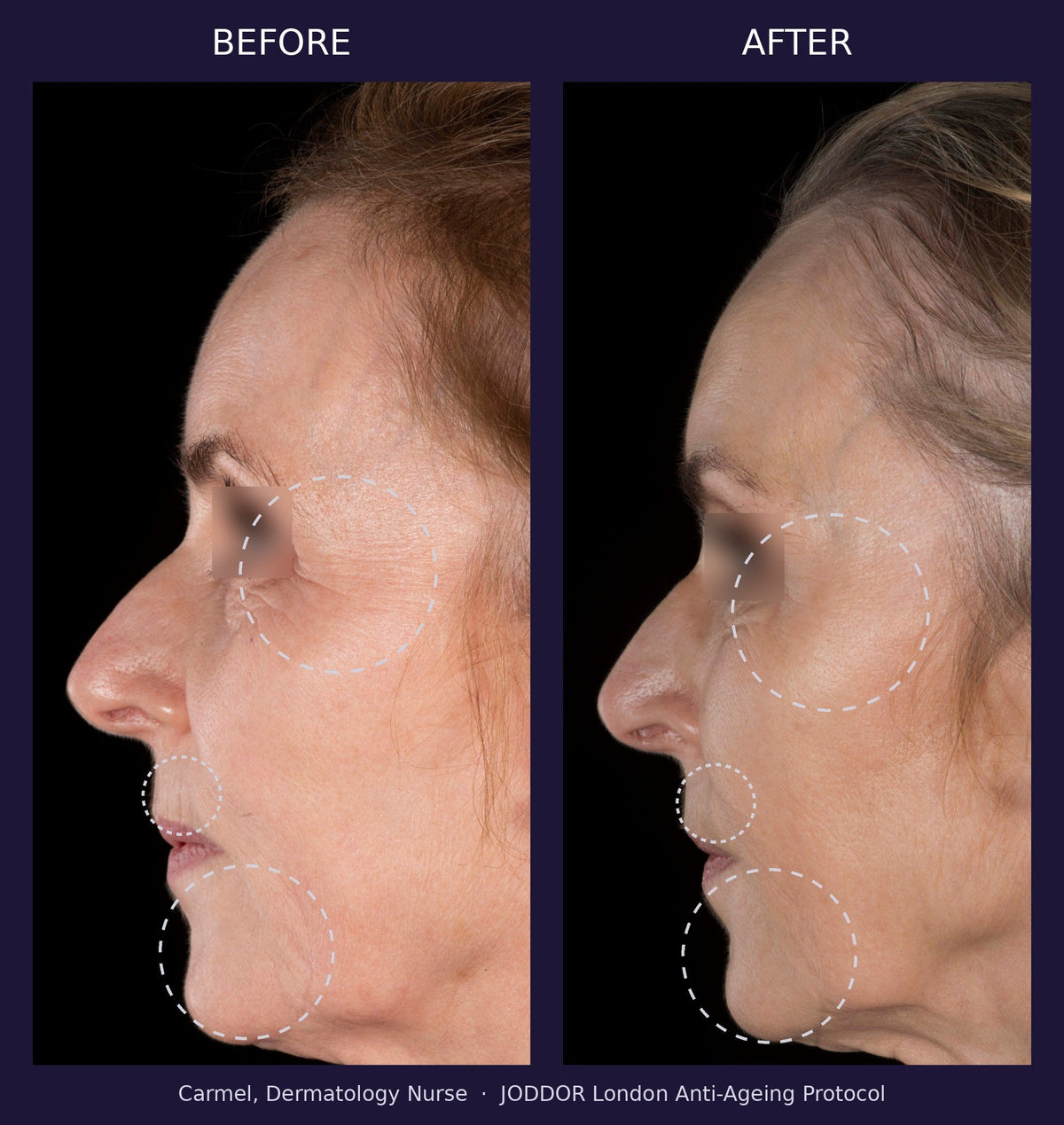
"The products are excellent. They have improved the texture and appearance of my skin. As a dermatology nurse I have used many products, and these are definitely very effective."
Carmel, Dermatology Nurse, JODDOR London Anti-Ageing Protocol (before and after above)
What is retinol?
Retinol is a form of vitamin A. Unlike many ingredients that only sit on the surface, retinol works inside the skin to support its natural renewal. That is why it remains a cornerstone of dermatologist-guided anti-ageing care.
How retinol works on fine lines and wrinkles
As consultant dermatologist Dr Penelope Tympanidis explains, retinol works in several ways at once:
- It speeds up cell turnover. Dull, older surface cells are replaced more quickly, so skin looks smoother and brighter.
- It boosts collagen. Retinol stimulates fibroblasts, the cells that produce collagen, and helps slow its breakdown, strengthening the skin's structure.
- It increases hyaluronic acid. This improves elasticity and plumpness, which softens the look of fine lines and wrinkles.
- It helps fade sun spots and refines the look of dilated pores.
When should you start?
Retinol is ideal when the first signs of ageing appear: fine lines, dilated pores and dull skin. Because retinoids also improve texture and help control breakouts, a simple retinol routine can also suit younger, acne-prone skin.
The step that makes retinol work: daily SPF
Retinol renews the skin, and fresh skin needs protection. Daily sun protection is essential when using retinol, and it is also one of the most effective ways to delay ageing and prevent pigmentation.
Dr Penelope's key tip: apply your sunscreen on its own in the morning. Mixing SPF with serums, moisturisers or layers of make-up dilutes it, lowering its protection in ways you cannot control.
How to use retinol without irritation
- Apply in the evening, after cleansing and toning.
- Start slowly, every other night, and build up as your skin adjusts.
- Keep your routine simple. Layering many actives increases irritation.
- Always follow with SPF 50 the next morning.
The JODDOR Anti-Ageing Protocol
Our Anti-Ageing Protocol is a simple two-step routine built on this approach:
- PM: Retinol Night Cream, a nourishing night treatment with retinol, argan oil and shea butter to support renewal while caring for the skin barrier.
- AM: Daily Defense SPF 50, broad-spectrum UVA/UVB protection to protect your results and prevent pigmentation.
Two steps, used consistently, without skin overload: protect, correct, maintain.
Not sure which protocol is right for you? Find your skin protocol in two minutes.
This article is for general information and is not medical advice. Individual results vary. If you are pregnant, breastfeeding or have a skin condition, speak to your doctor before using retinol.